
Houston's clay soil swells and shrinks with the seasons — leaving driveways, patios, and garage floors sunken and cracked. We lift them back to level with polyurethane foam, for a fraction of replacement cost.
Tell Us What's Sinking
Thank You!
We'll get back to you shortly. For immediate help, call 346-214-2470.
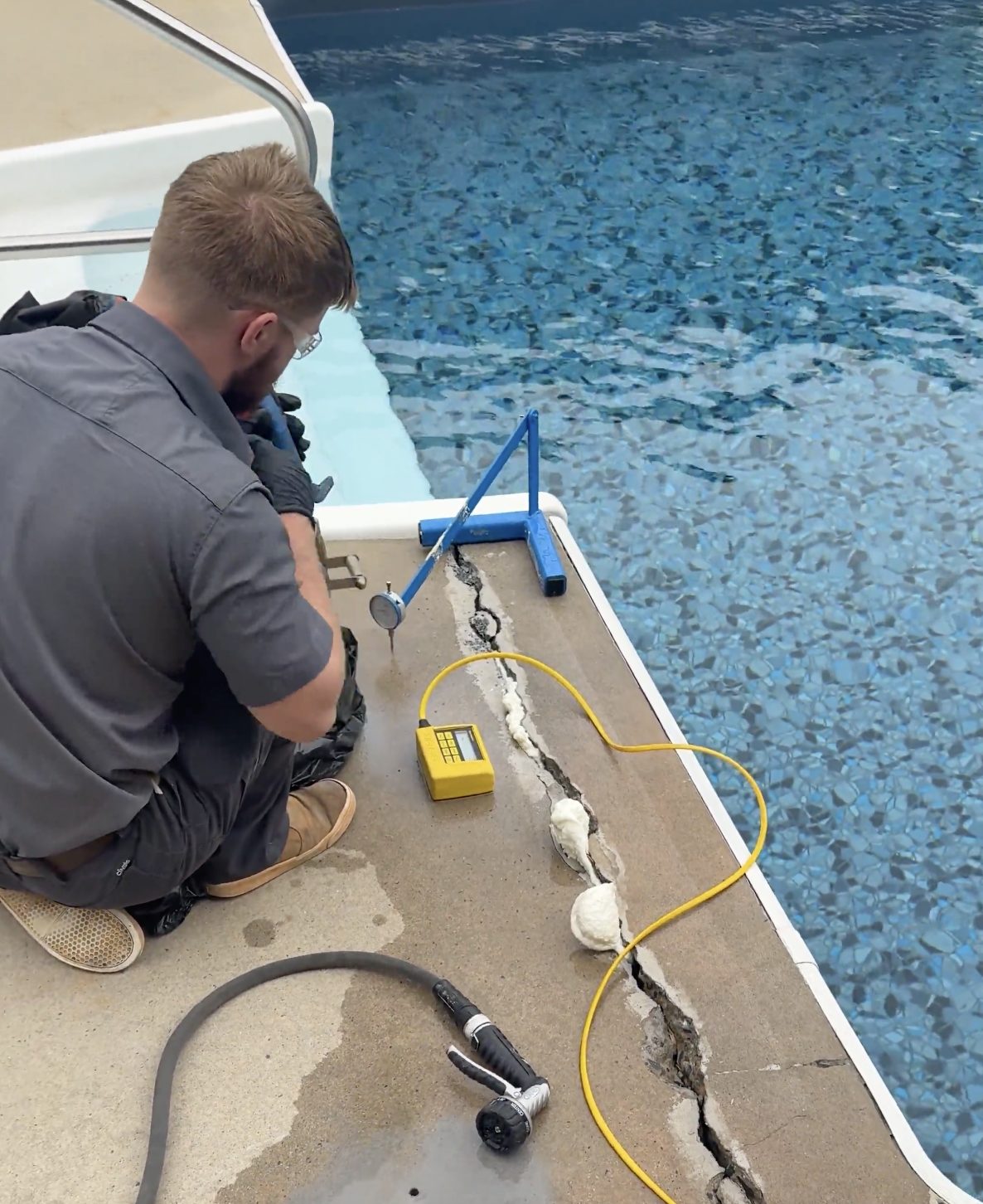
Concrete Leveling of Houston lifts and levels sunken, uneven concrete across the metro — driveways, sidewalks, patios, pool decks, garage floors, and interior slabs. Rather than tear the slab out and repour, we pump expanding polyurethane foam beneath it; the foam fills the gap that opened up underneath and floats the concrete back to level — usually within a few hours, and ready to use the same day.
Most of the time, the problem isn't the concrete — it's what's under it. Houston sits on expansive clay soil that swells when it's wet and shrinks when it dries out, so every rainy spell and summer drought flexes the ground beneath your slab. Add in the heavy rains and flooding this area is known for, which wash out the sub-base, and the concrete eventually drops into the gap left behind. Polyurethane lifting solves both: it raises the surface back to level and fills the voids that caused the settling — at a fraction of replacement cost, without the demolition or the days of downtime.
Every service below uses the same polyurethane foam process to bring settled, uneven concrete back to level — no tear-out, no repouring, and usually ready the same day. Here's what we lift across the Houston area.
Concrete leveling is the core of what we do, and every service below is a version of it: we raise a slab that's dropped, tilted, or gone hollow underneath by pumping expanding polyurethane foam into the empty space beneath it. Driveways, walkways, patios, pool decks, garage and interior floors — if it sank, there's a good chance we can lift it instead of replacing it.
The slab itself is rarely the problem. Houston sits on expansive clay that swells after a wet stretch and pulls back when it bakes in the summer, and that constant movement — plus the heavy rain that scours soil out from under the edges — leaves a gap the concrete settles into. Foam fills that gap and lifts the slab in one step: we're not just jacking it up, we're replacing the support that went missing.
The work is quick and clean. We drill a few 5/8-inch ports, inject the foam, watch the slab rise, and plug the holes — it's cured hard enough to use in about 15 minutes and holds thousands of pounds per square foot. For most homeowners it runs roughly half the cost of demolition and a fresh pour, with none of the week-long wait for new concrete to cure.
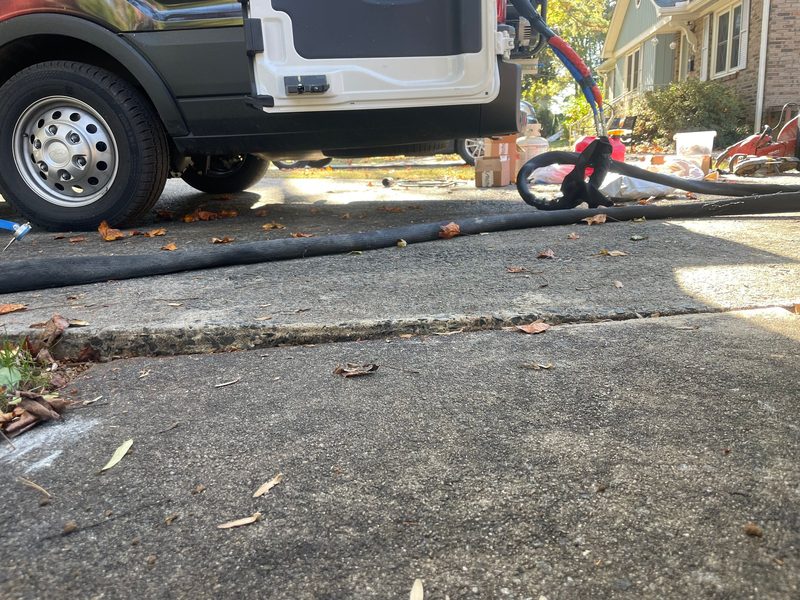
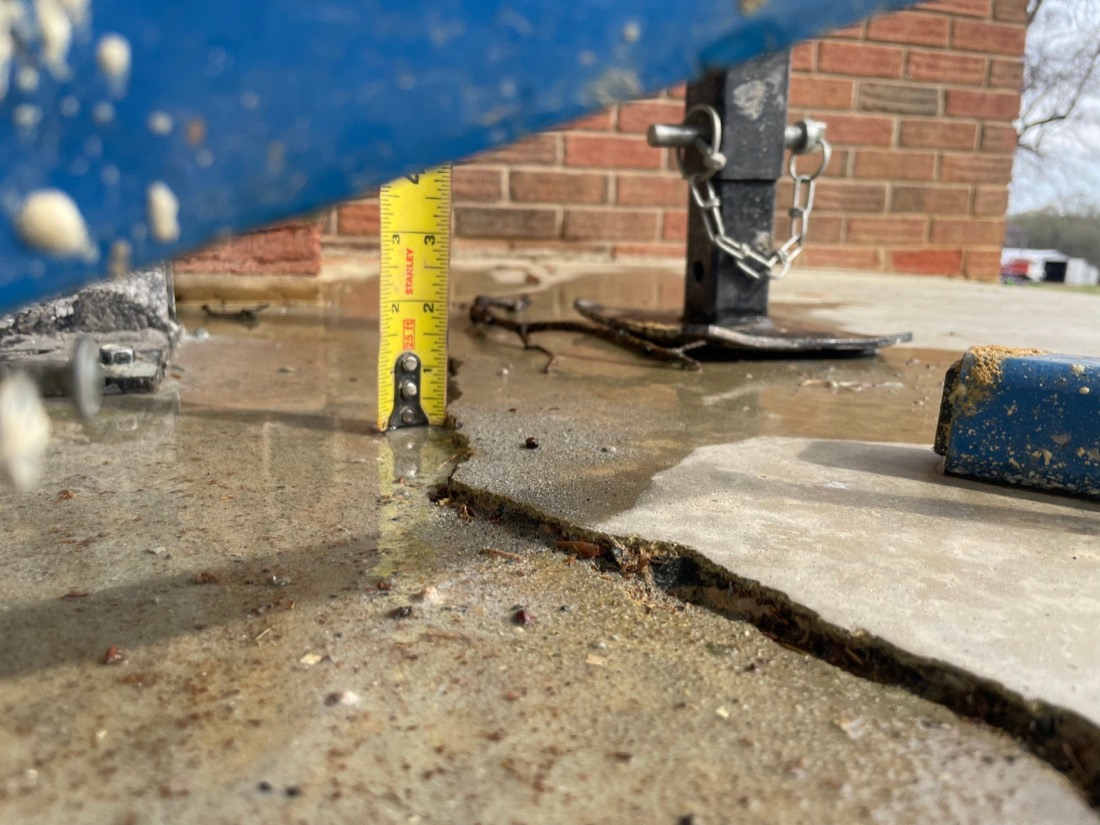
A driveway is the heaviest flatwork on the property and it's poured over backfilled ground, so it's usually the first slab to show trouble — a panel dropped at the joint, a sunken apron where the concrete meets the street or garage, or a raised seam that grabs a tire.
When the clay underneath swells and shrinks, or a hard rain washes out the base near the edges, whole sections tip or sink at the joints. We inject foam under the low panels to raise them flush with the rest and fill the void beneath so they stay there — you're parking on it the same day, with none of the tear-out or curing time a replacement needs.
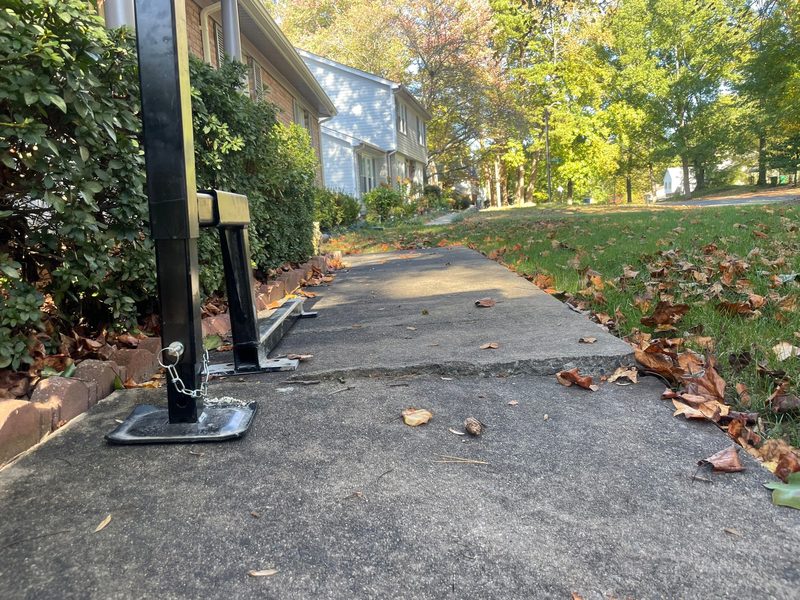
Front walks and side paths usually fail one square at a time: a panel lifts, the next one drops, and suddenly there's a lip big enough to catch a toe — or to put you on the wrong side of a city or HOA sidewalk notice. Even half an inch counts.
Walkways are thin and sit right where tree roots and shifting clay do the most damage, so they go out of level faster than almost anything else on the lot. We raise the low and offset squares back into plane, usually in an hour or two, and the trip edge is gone — no jarring stripe of fresh gray next to aged concrete, and if you're on a repair deadline, lifting clears it far faster than ripping the walk out and waiting on a pour.
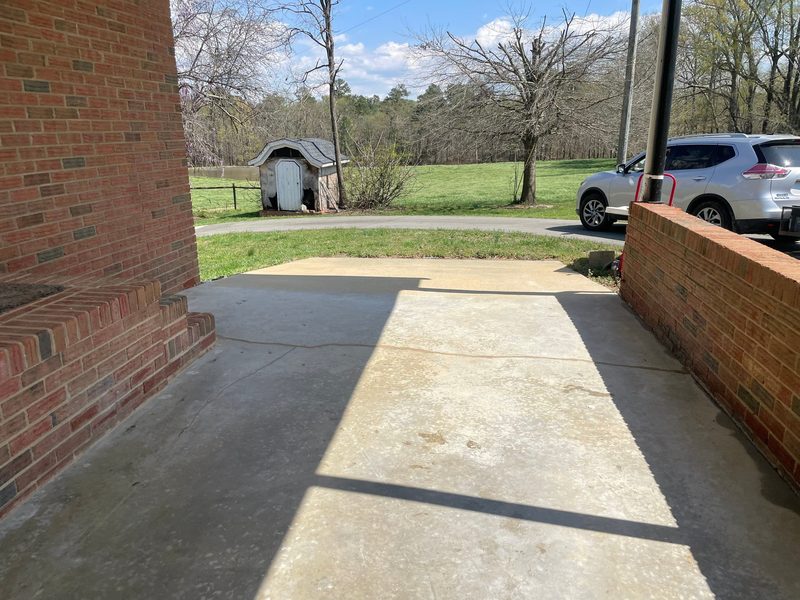
A patio tends to announce its settling through water: it starts pooling by the back door, or the whole slab tips back toward the house instead of carrying rain away from it. In a city that floods as easily as Houston, a patio draining toward the foundation is the last thing you want.
Patios are often poured over the loosest fill on the lot, so they settle unevenly and lose their slope. We lift the slab back to level and re-pitch it to shed water away from the house again. Because the foam works from underneath through small ports, we can raise stamped, stained, and decorative patios without cracking or bleaching the finish — the kind of surface a tear-out would cost you for good.
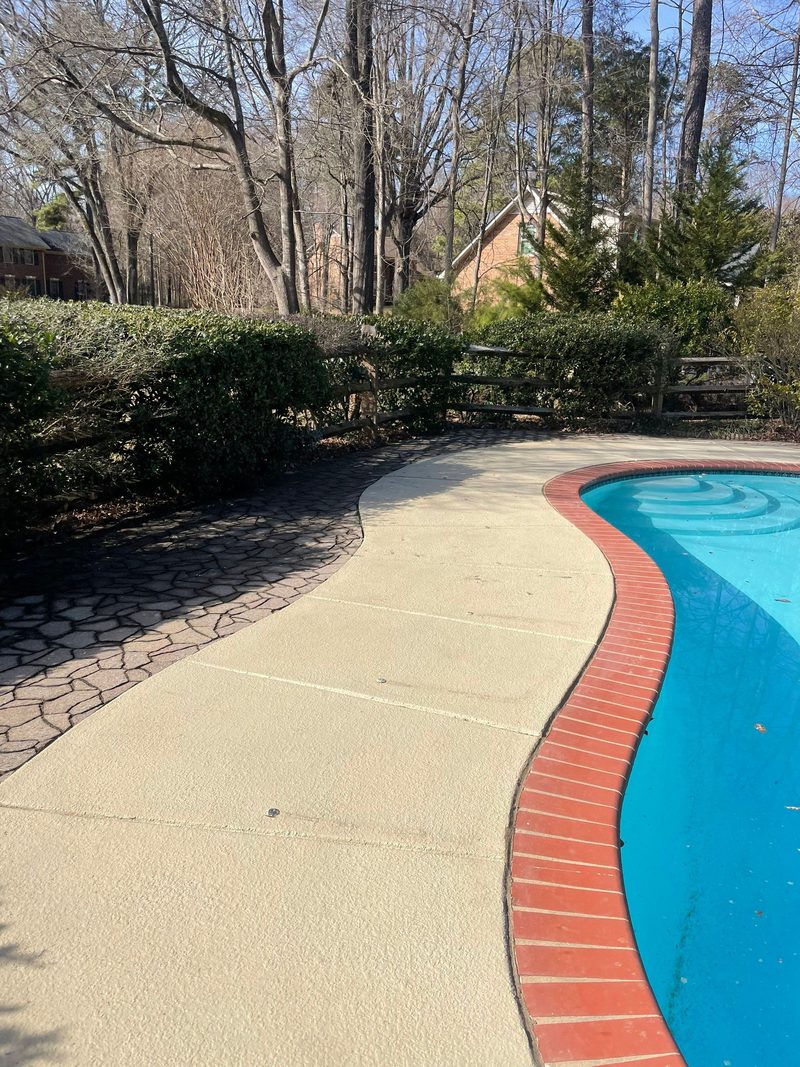
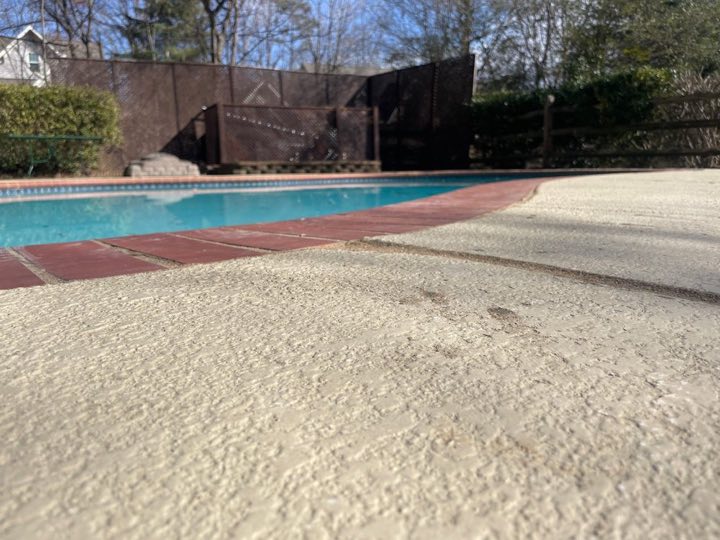
Around a pool, settling shows up at the coping — the deck drops where it meets the water, lips open between slabs, and sections start pitching the wrong way. The ground ringing a pool was dug up and repacked when the pool went in and never fully settles, and constant splash-out keeps rinsing the base out from under the deck.
We raise the deck back level without draining the pool or disturbing the shell, and the foam lets us lift spray-deck, cool-deck, and paver finishes — the textured surfaces most Houston pool decks are built with — without ruining them. One honest note: if slabs are dropping right at the coping, that can point to a drainage or plumbing issue below the deck, and we'd rather find that before we lift than have it come back.
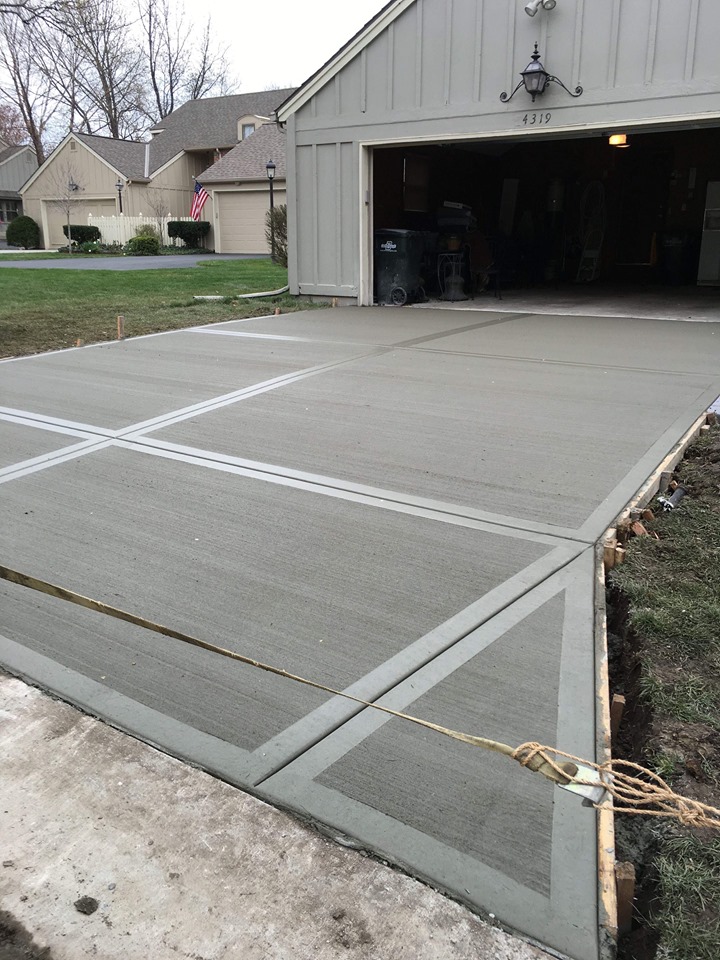
A garage slab that's sunk toward the middle or the door, cracked across, or sloped so the door won't seal and water runs inward is a daily annoyance — and usually a sign the fill beneath it has settled or washed out.
We float the slab back level and fill the void so the door clears, the cracks stop widening, and water drains out the way it should — attached garage or detached, with no jackhammering. And if an epoxy or polyaspartic floor is on your list, this is the step to do first: the coating only looks right over a flat, sound slab, so we level, then you coat.
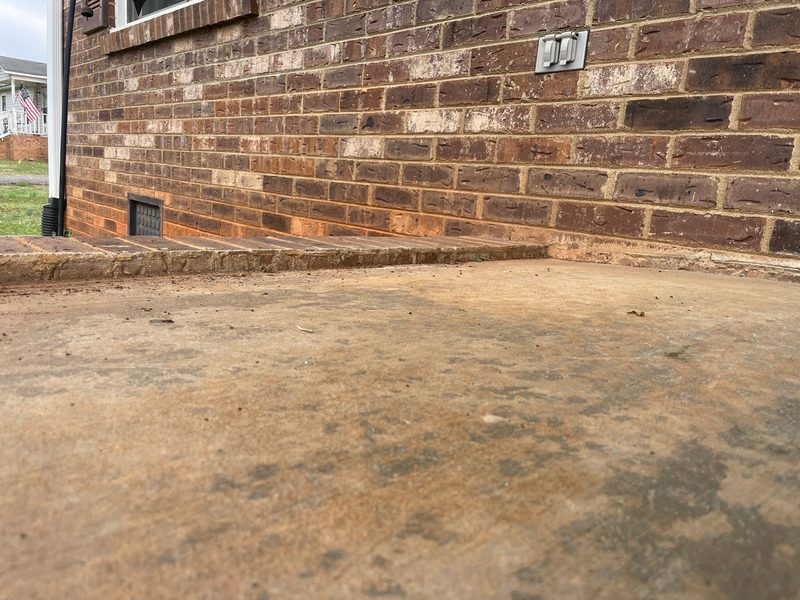
This is the same foam process aimed at interior and structural slabs — living-area floors on a slab foundation, room additions and sunrooms, porch pads, and other concrete inside or built against the house. Houston homes sit on slabs, not basements, so when an interior floor drops, this is usually the fix.
An interior slab settles when the fill under it compresses or erodes, leaving a hollow that cracks tile and throws the floor out of level. We inject foam through small ports to fill that hollow and re-seat the slab from below — no pulling up flooring, no breaking the slab out to re-pour it.
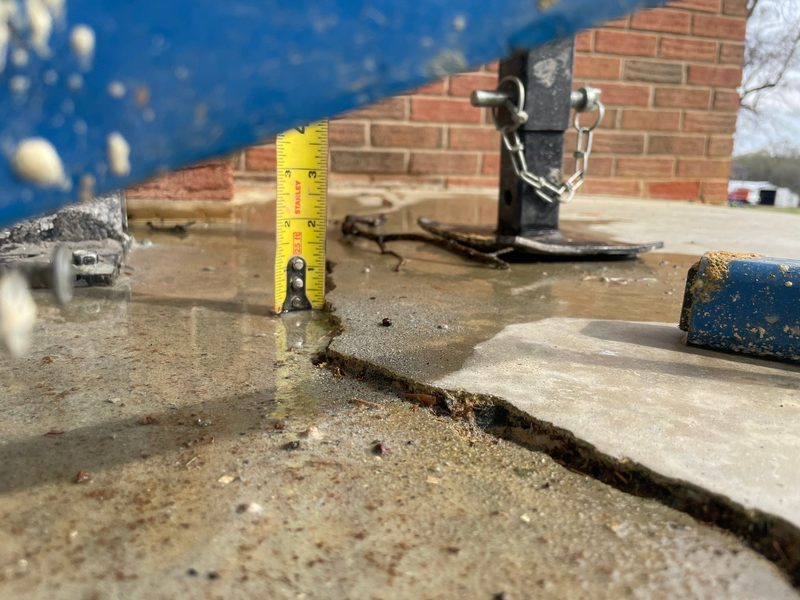
Cracks and split control joints are more than cosmetic — they're how water gets under the slab in the first place, and that water is exactly what erodes the base and starts the next round of settling. Sealing them is part of making a repair last, not an afterthought.
We clean out, fill, and seal cracks and control joints to shut that water path down, and we usually handle it in the same visit as a leveling job — so the lift holds instead of sinking again.
No tear-out, no heavy equipment — most jobs are done in a few hours with polyurethane foam, and you use the surface the same day.
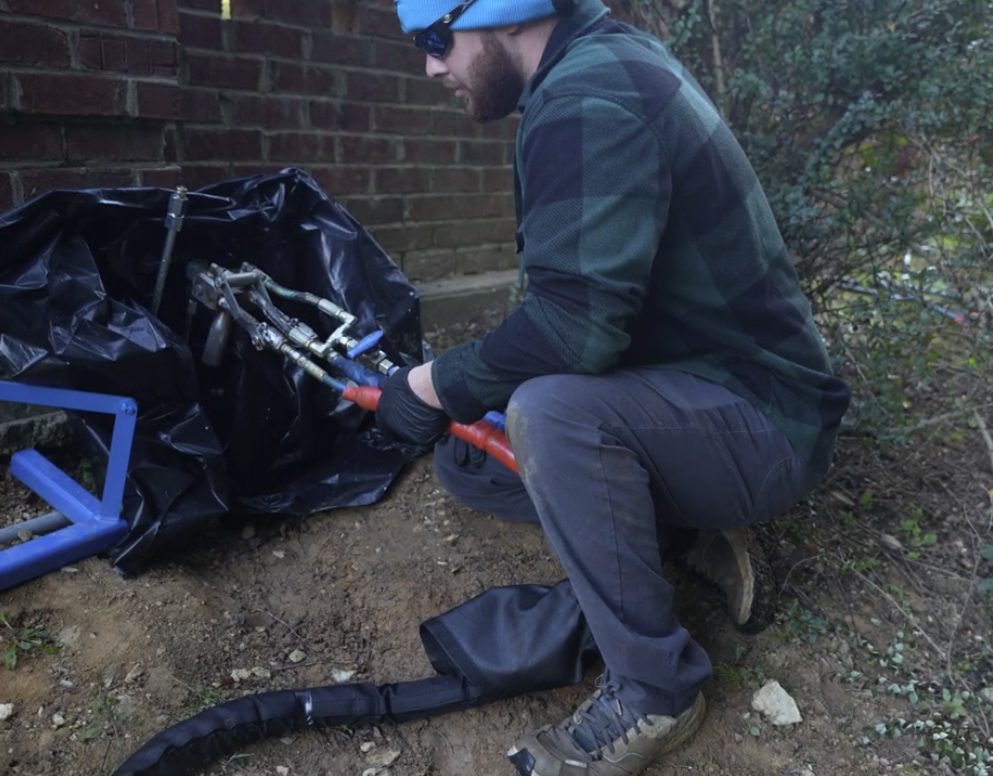
We come out, measure how far the slab has dropped, and find out why it sank — a void under the concrete, a washed-out base, or water draining the wrong way. Pinning down the cause is what keeps the fix from undoing itself.
We drill a series of holes through the slab in a planned pattern — each about the size of a penny, 5/8 inch across, and small enough to disappear when we patch them.
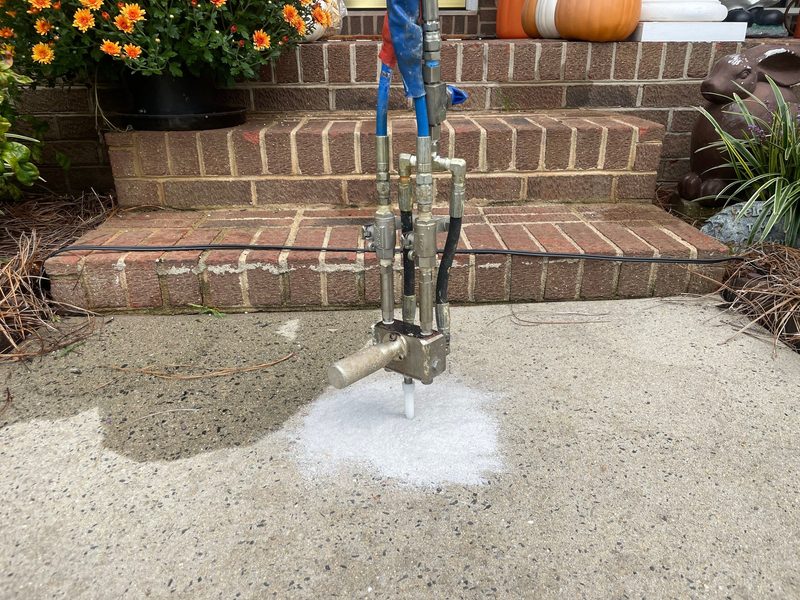
We inject high-density polyurethane foam through the ports. It expands to fill the empty space underneath and raises the slab back to level as we watch, then cures hard — and waterproof — within minutes.
We fill the holes flush with the surface, clean up, and you're back to using it the same day — typically for about half the cost of tearing it out and repouring.
We don't pour foundations or frame houses — lifting and leveling sunken slabs is the whole business. That means a crew that's done this thousands of times, not a general contractor sorting it out on your driveway.
We come look for free, pin down what's actually moving, and give it to you straight — even if the answer isn't a lift. If the real problem is your foundation and not the slab, we'll tell you, instead of selling you a repair that won't hold.
You get one fixed price in writing before any foam goes in — no hourly meter, no mid-job change orders, no bigger number waiting at the end.
Every job is handled by licensed, insured crews and backed by a written warranty — so your property and the repair are both covered, not riding on a handshake.
Sunken concrete almost always comes down to the ground underneath — and few cities are harder on a slab than Houston. The area sits on the flat Gulf Coast plain, much of it on expansive clay so prone to movement it's become famous for wrecking foundations. Add some of the heaviest rainfall and flooding in the country, plus a long history of the land itself sinking, and you've got a recipe for concrete that won't stay level. Here's what's actually working on your driveway, patio, or garage floor.
Much of the Houston area sits on expansive clay — the kind geologists call a "vertisol," and the reason Houston Black is the Texas state soil. It drinks up water and swells after a wet spell, then shrinks and cracks as it dries, opening gaps wide enough to swallow a slab's support. That constant wet-dry movement is the single biggest reason concrete goes uneven here.
The flip side of that clay is drought. In a hot, dry Texas summer — the severe 2011 drought is the classic example — the clay gives up its moisture, shrinks, and pulls back from under your concrete, and the slab drops into the space it leaves behind. It's why so many Houston driveways and patios start settling after a brutal summer.
Houston is one of the most flood-prone cities in the country, and it's flat, so water sits and runs where it wants. Heavy rain, poor drainage, and downspouts wash the fine soil out from under a slab, leaving a hollow void. The concrete eventually drops into it — which is why a slab can look fine for years, then sink almost overnight after a big storm.
Houston has a settling problem bigger than any one yard: decades of pumping groundwater dropped parts of the region by several feet, with areas around Pasadena sinking the most. You won't notice it day to day, but it's part of why this whole area is notoriously hard on slabs and foundations — the ground here has a long habit of moving.
This is exactly why we don't just jack the slab back up — we fill the void and re-support the base underneath, so the repair holds instead of dropping again the next wet-dry season.
The reason to lift instead of replace is cost: you keep the slab you already have and pay to raise it, not to tear it out and repour. In the Houston area, polyurethane foam leveling generally runs about $6–$15 per square foot — more for a deep drop or a large void underneath — and for a localized repair it's often about half the cost of replacement or less. It runs 20–50% more than old-style mudjacking, but it lasts 10–15 years instead of 5–7 and is lighter on Houston's weak clay, so it's usually the cheaper fix over time.
A single slab up to a short run.
One sunken section to a full driveway; large or badly-settled drives run higher.
Priced by the square footage of the area.
What changes the price: how far the concrete has dropped and how big the void beneath it is — foam is priced by how much it takes to fill the gap, not just surface area — plus the total square footage, how many separate slabs are involved, and access to the area.
These are typical ranges, not a firm quote — small jobs carry a minimum (usually around $300–$700), and the exact number depends on your slab, which is why every job gets a free, written estimate before any work starts.
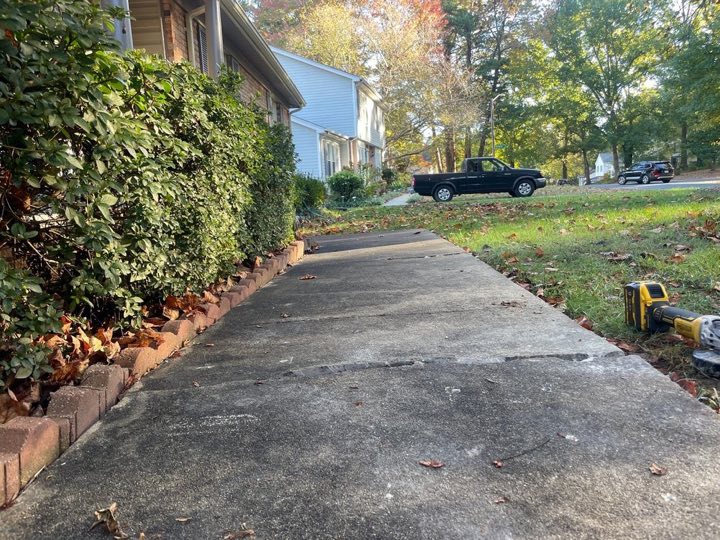
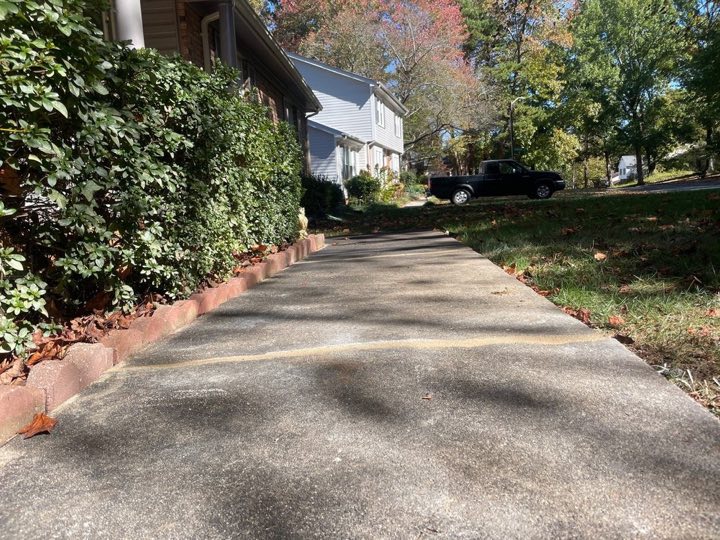
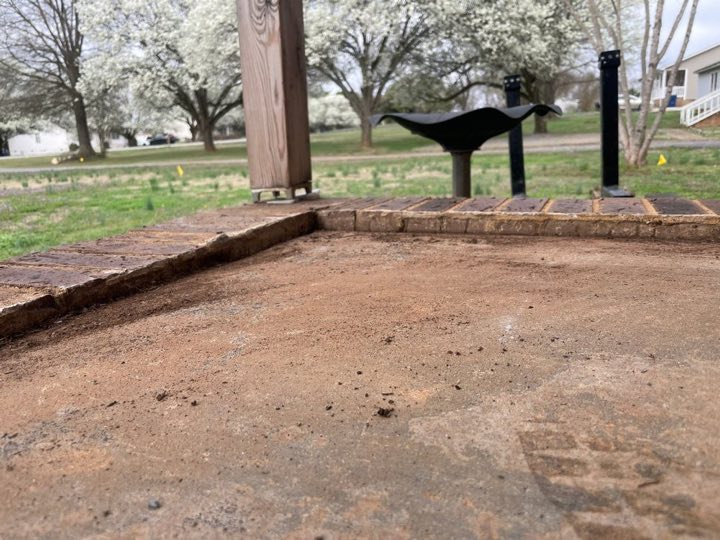
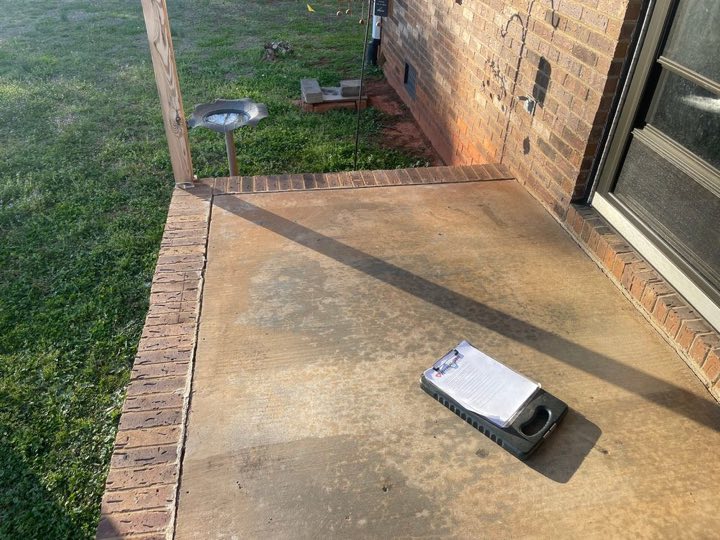
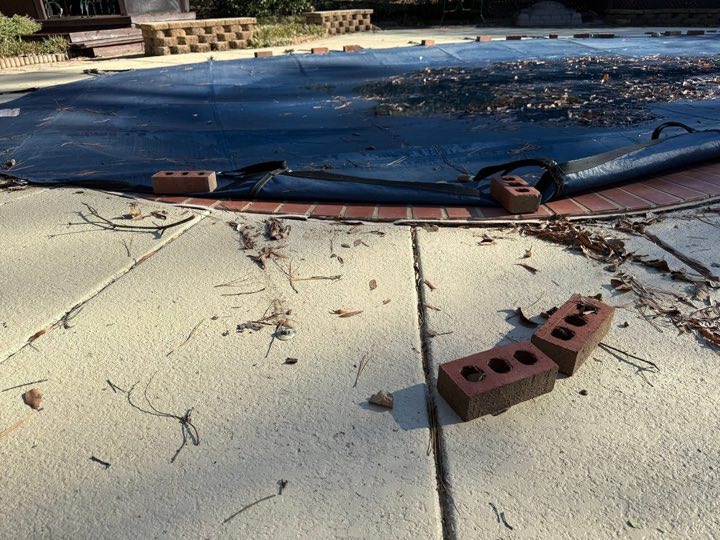
Real slabs we raised with polyurethane foam — the same concrete, back to level, no tear-out.
Straight answers to what we hear most during free inspections around Houston.
Most jobs run from a few hundred dollars for a single sunken slab to a few thousand for a full driveway or large area — polyurethane leveling generally runs about $6 to $15 per square foot, and it is typically far less than tearing the concrete out and replacing it. The exact number depends on how far the slab has dropped and how big the void is underneath, so every job gets a free, written estimate first.
For most Houston homes, foam. Old-school mudjacking pumps a heavy cement slurry — around 100 pounds per cubic foot — under the slab, adding weight to the same soft, shifting ground that sank in the first place, and it can wash out over time. Polyurethane foam weighs only a few pounds per cubic foot, is waterproof, cures in minutes, and fills the void instead of just propping the slab up — which is also why it tends to last longer, usually 10 to 15 years versus 5 to 7 for mudjacking.
Polyurethane foam is waterproof and won't wash out or compress, so a properly done lift generally holds for 10 to 15 years or more. The key is fixing the cause — when we fill the void and re-support the washed-out base underneath, the slab has solid footing again, not just a temporary bump.
Not if the cause is addressed. Most settling comes from a void or washed-out base under the slab, and we fill that space as we lift so the concrete is supported again. If there's an ongoing drainage issue feeding the problem, we'll point it out so it can be corrected.
For a slab that's settled but still solid, yes — lifting puts it back to level and fixes what caused it, without the demolition, the downtime, or the cost of a full tear-out. Replacement only makes sense when the concrete itself is crumbling or badly broken up, not just sunken.
The patch-and-pour products at the hardware store only smooth small surface dips — they can't lift a sunken slab or fill the void underneath that caused it, so an outdoor slab will keep dropping. Raising a settled slab takes polyurethane foam injected under pressure from below, which is a pro job with specialized equipment.
Yes. Because the foam works from underneath through small holes about the size of a penny, we raise stamped, stained, spray-deck, and cool-deck surfaces without cracking or discoloring them — something a tear-out can never match, since a new pour won't recreate your existing pattern or color.
Sometimes. A sunken driveway, porch, or garage slab next to the house is usually just a settled slab we can lift. But if you're also seeing cracks climbing the walls, doors and windows that stick, or floors that slope inside, that can point to a foundation issue rather than a slab problem — and we'll tell you honestly what we see at the free inspection, instead of selling you a lift that won't solve it.
Most residential jobs are done in a few hours, and because the foam cures within minutes, you can walk or park on the surface the same day — no waiting days for concrete to set.
We handle private walkways, driveways, patios, and slabs on your property. The public sidewalk along the street is typically the city's responsibility, so that's usually not a homeowner job — but if you're unsure where your property line falls, we can help you sort it out.
Yes. Polyurethane foam is waterproof — it doesn't wash out, break down, or lose strength when the ground gets soaked. The bigger factor is filling the void underneath: once the empty space that let the slab drop is packed solid, the seasonal swelling and shrinking of Houston's clay has far less room to move it. And if a drainage problem is still sending water under the slab, we'll flag it so it gets fixed — that's what makes a lift hold year after year.
We lift and level concrete for homeowners across Houston and the surrounding suburbs — from the neighborhoods inside the Loop out to the master-planned communities ringing the metro.